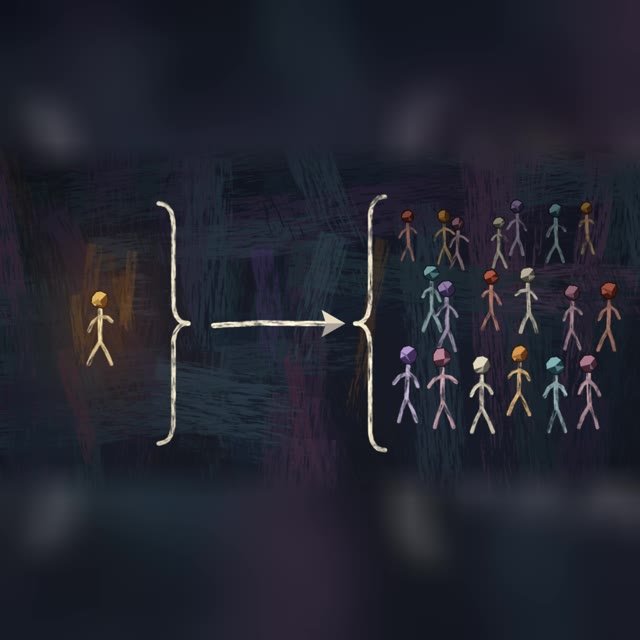
In Part 2, you learned everything about Skool's growth-loop model.
In this essay (Part 3), you will learn how Skool applied this model in practice.
Enjoy.
For a platform like Skool to really take off, you need to have strong success stories from other popular creators.
Keep in mind, Sam refused to run ads for Skool (a significant decision I will dissect later in this post).
So, if not with ads, how did Sam "get the right people in"?
For one, he had a thriving YouTube channel, which had around 500k subscribers. He posted long-form, minimally edited videos of himself talking about entrepreneurship. When he sold Consulting.com, he started filming content about Skool, and this was one way he was generating traffic.
But, being the info-product guru, he had also built up a healthy email list of his Consulting.com customers who already trusted him as an expert businessman.
His email list was full of coaches, consultants, course creators, and experts — the people who already had a product to sell and an audience, making them an ideal fit for Skool.
And so his newsletter became the primary channel to drive new users.
In some of his emails, he simply described one of Skool's features, connected it to a benefit, and then gave a CTA link to the platform. Super simple.
In others, he got more creative.
-
In 2022, he promoted a special Black Friday Deal for 4 days. The offer was a yearly Skool subscription ($1188) combined with his mastermind Wetube ($9,800), both at a cool 91% discount, so customers got them at $999.
(Wetube was Sam's mastermind on how to sell community-oriented masterminds with recurring fees — so it fit well with Skool's subscription)
-
In 2023, he promoted a 28-day Skool Membership Challenge, with $100k in prizes. There were three ways to win:
- Get the most paid members (1st, 2nd, 3rd)
- Get the most MRR (1st, 2nd, 3rd)
- EVERYBODY who gets 10 paid members
Prizes included: 16" MacBook Pro's + 27" LG 5k screen's + Lifetime FREE Skool
-
Earlier that year, he also started to push Skool's Affiliate program to drive more users to the platform.
By referring Skool to people who want to start their own subscription community, the platform offered 40% monthly commission for the lifetime of each customer. And they also made the "autoaffiliate" option, so that if any of your community members make a community of their own, you automatically get a 40% commission from them.
But arguably the most important were the success stories from established creators.
Before doing any special promotions, Sam first made sure to feature a couple of strong testimonials to show how exceptional Skool is.
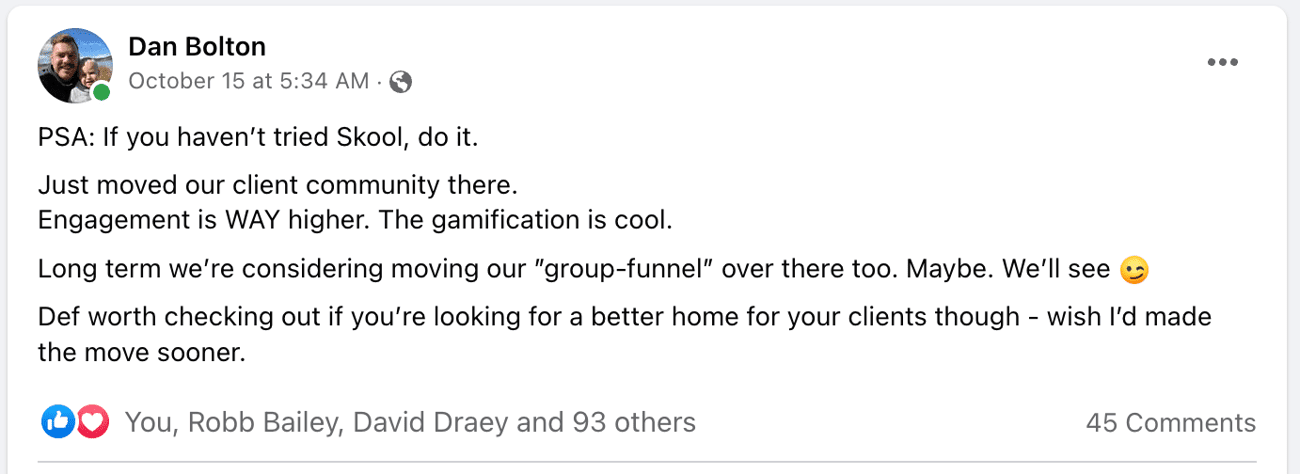
Dan Bolton
A former youth pastor turned business coach. When he first started online, he scaled an agency to $130k/m over 20 months. He launched his own coaching in 2020, and with it already hit a $340k cash month the next year in 2021. Despite the success, he shut it all down in 2025, and is now focused on building a body of work that doesn't require selling his time.
The next month, Sam featured another big creator, Vanessa Lau
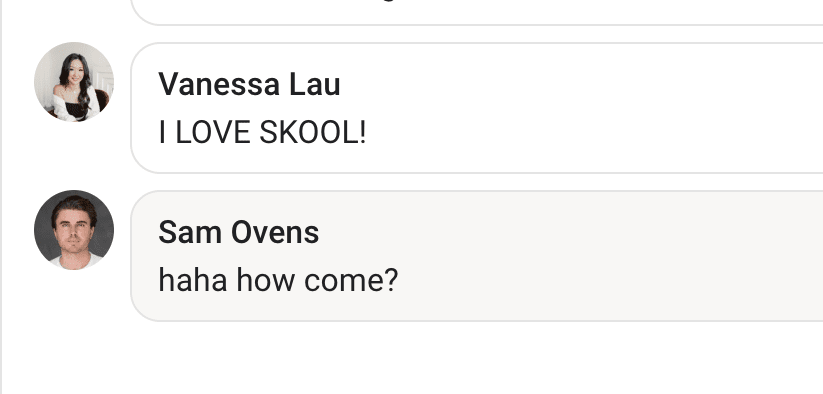
Vanessa Lau
Founder of Superboba — superfood teas for mood and focus, and a creator with over 1M followers on YouTube and over 317k on Instagram. It's on her YouTube channel where she teaches viewers how to start their own online business and grow an audience on YouTube and Instagram.
With every success story, Skool's brand was reinforced.
And soon, it started attracting the biggest players in the industry — like Frank Kern, who is one of the most sought-after direct response internet marketing consultants.
At first, he shot a message to Sam, thanking him for building such an awesome platform:
"This app is amazing! I've tried all kinds of community/course delivery apps and this one crushes them all.
It's EASY - which means that:
Introverted and somewhat lazy community leaders like me are WAY more inclined to interact, post, contribute, etc.
You can create a community with content etc in less than a day. Ours was up, running, and full of great discussions in less than 24 hours - and I'm not too bright.
THE USERS are far more likely to use it - which is the whole point.
We've got more engagement in our new little community in less time than anything I've ever tried.
Best part - nobody had to read the directions. It's intuitive.
Favorite feature - ability to paste loom links into video thingy and create/post content super fast.
This had to have taken a lot of time to develop. Well done and thank you for making it."
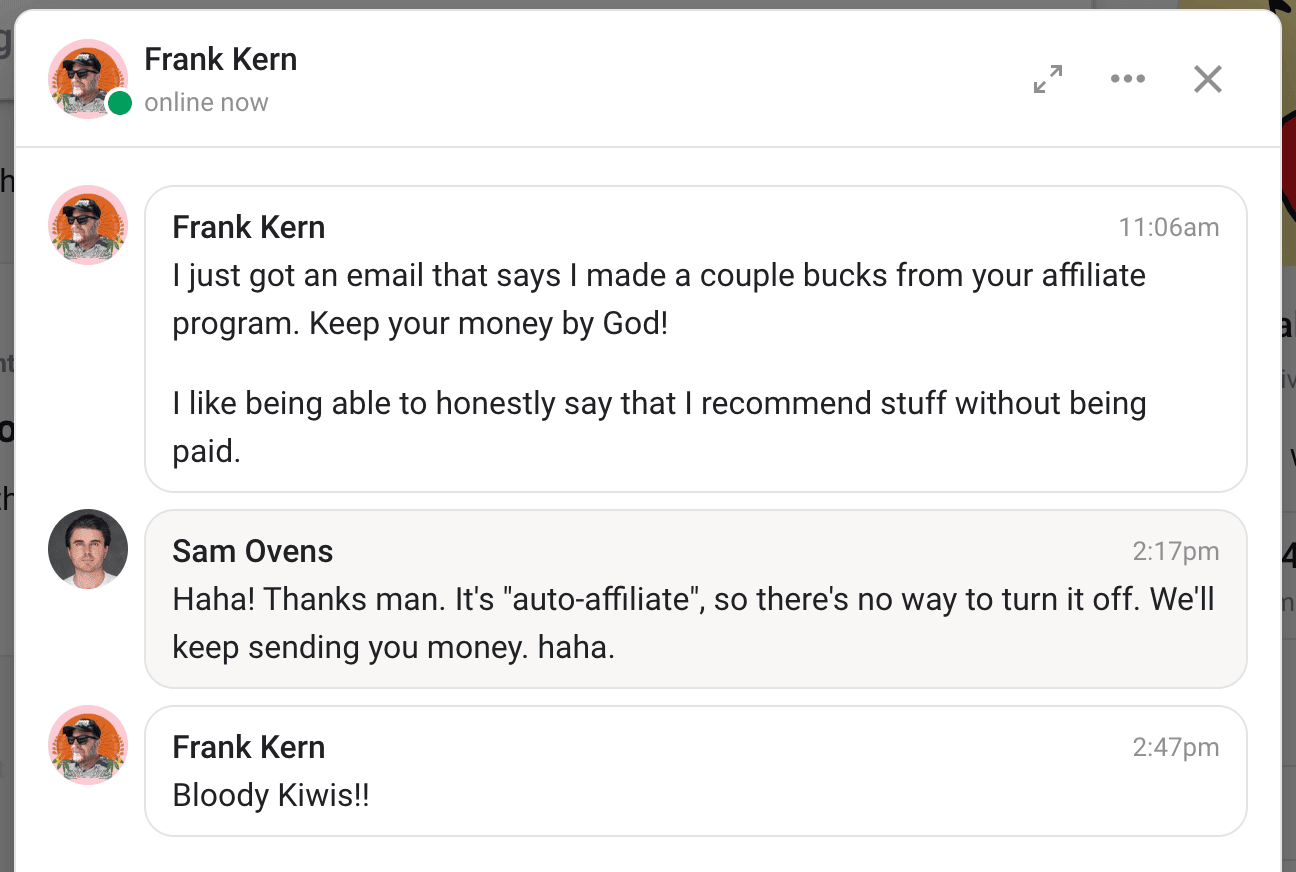
In fact, Frank liked Skool so much, he even promoted it on his own, without even knowing about Skool's affiliate system!
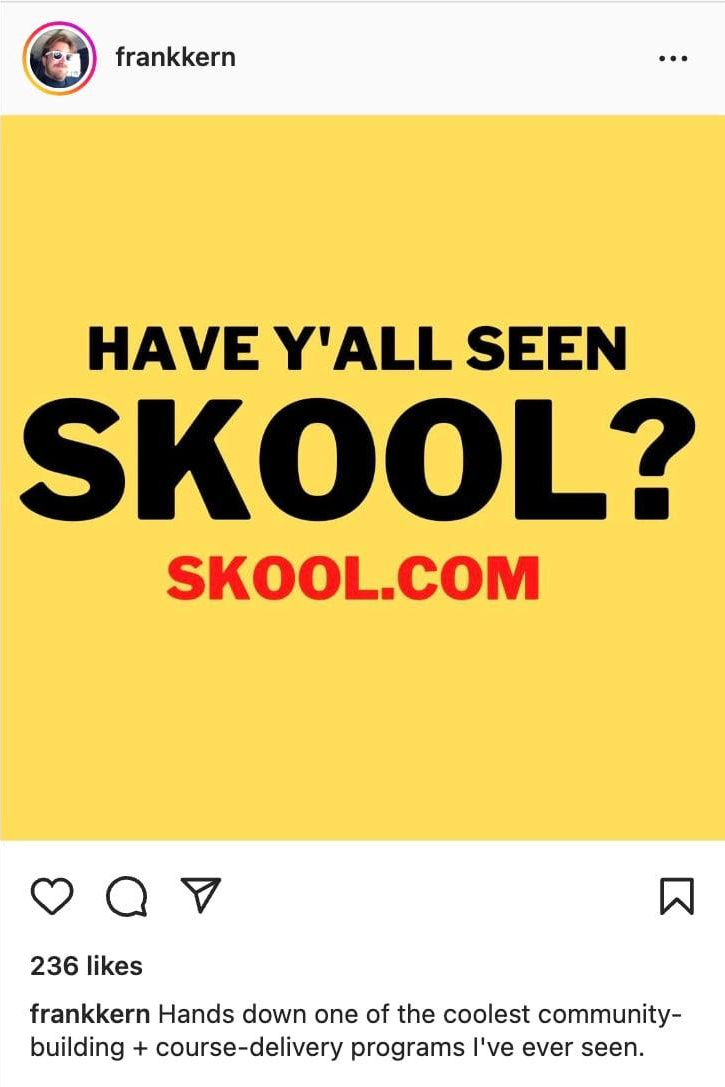
Frank Kern
A consultant to eight- and nine-figure companies who want to increase profits by implementing better marketing campaigns, strategies, and automations in their businesses. He also built oJoy.ai, an AI marketing partner, trained on decades of copyrighted marketing education.
Another great move Sam made was creating a Skool community, dedicated just for Skool community owners, where every member was encouraged to share what worked for them.
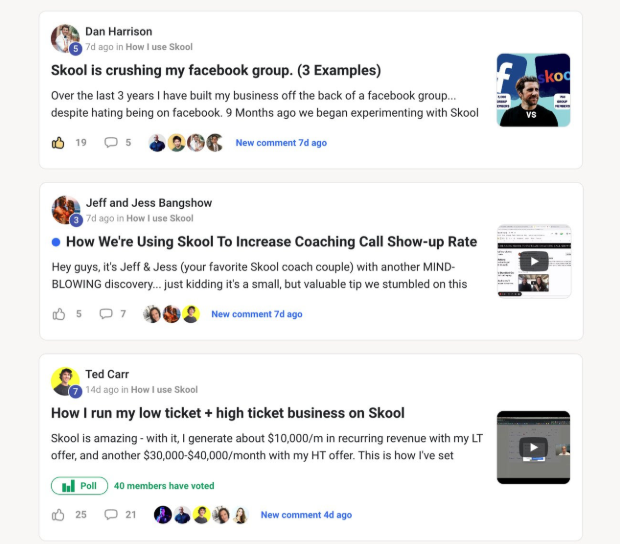
This made it even easier to farm success stories, and soon exceptional ones were popping up on a regular basis, ready to be used for Sam's newsletter content.
However, in April 2023, Sam upped his game — again. He started featuring videos of community owners breaking down their funnels and strategies.
Internet personality Hamza Ahmed was the first to be featured this way:

Hamza Ahmed
A self-improvement guru with over 2.2M subscribers on YouTube. He runs and owns various Skool communities that cover self-improvement, starting an online business, and 1-on-1 mentorships.
And this format stuck. Soon, other creators followed.
Ted Carr was the next creator to be featured like this:

Ted Carr
An early Skool investor, an online coach, CEO of a funnel-building software called Optins.com, and a dedicated fruitarian.
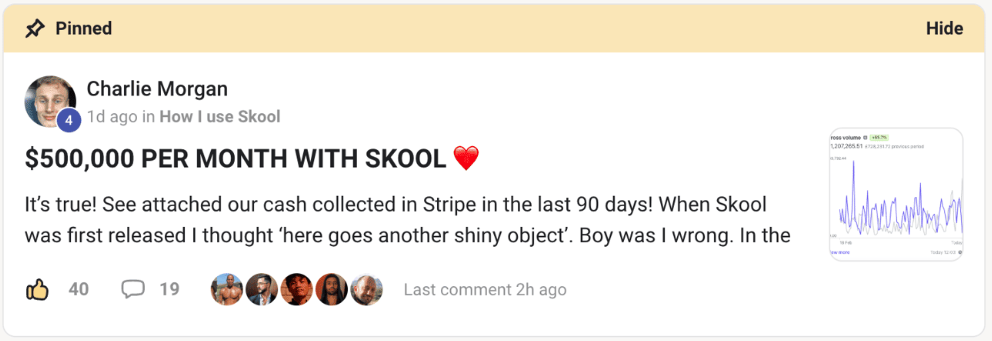
Two weeks later, Sam broadcast a 3-part email series, showcasing his most successful Skool community at the time — Charlie Morgan's EasyGrow, a program teaching how to land clients organically.
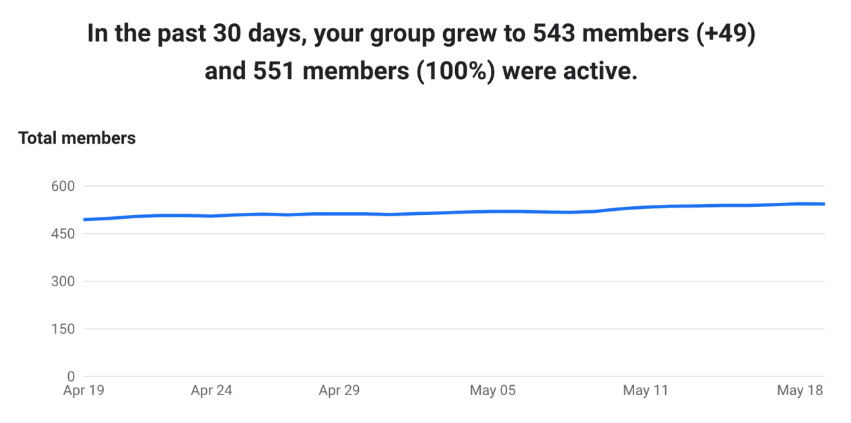
The first email was about briefly introducing EasyGrow, its founder, and the community's outstanding 100% engagement rate.
The second and third emails directed readers to a Loom video where Charlie breaks down how he runs his community.

Charlie Morgan
Co-Founder of Imperium Acquisition, a system for client acquisition that thousands of clients went through, hosted across different Skool communities which Charlie owns. He also shares a lot of tips about business, growth, and mindset on his YouTube channel to his growing 300k subscriber audience.
And it was this structure: a short brief in the first email + video of the community owner's strategy in the second email that Sam ran with from then on.
Just 5 days after showcasing Charlie Morgan's EasyGrow, Sam featured another exceptional success story following this structure.

Oli Billson
Founder and CEO of NextLevelBusiness.com, built to help experts sell their advice online. Oli has started, grown, and scaled five separate 7-figure businesses of his own.
It makes a lot of sense why Sam used this format.
As a creator, migrating your entire business over to a new platform can feel quite daunting.
By featuring successful community owners breaking down their funnels and strategies, the quality and simplicity of the product could be highlighted, convincing the skeptics that Skool is the superior choice to whatever they are using now.
And the community owners who volunteered to analyze their business got free promotion to Sam's Skool group and his newsletter.
By this point, Skool was a phenomenal product — it had achieved viral organic growth, growing 20% every month!
So now, Sam started looking for ways to scale distribution and reach many more people than his newsletter and YouTube channel allowed.
And he found just the right person to do it with: